
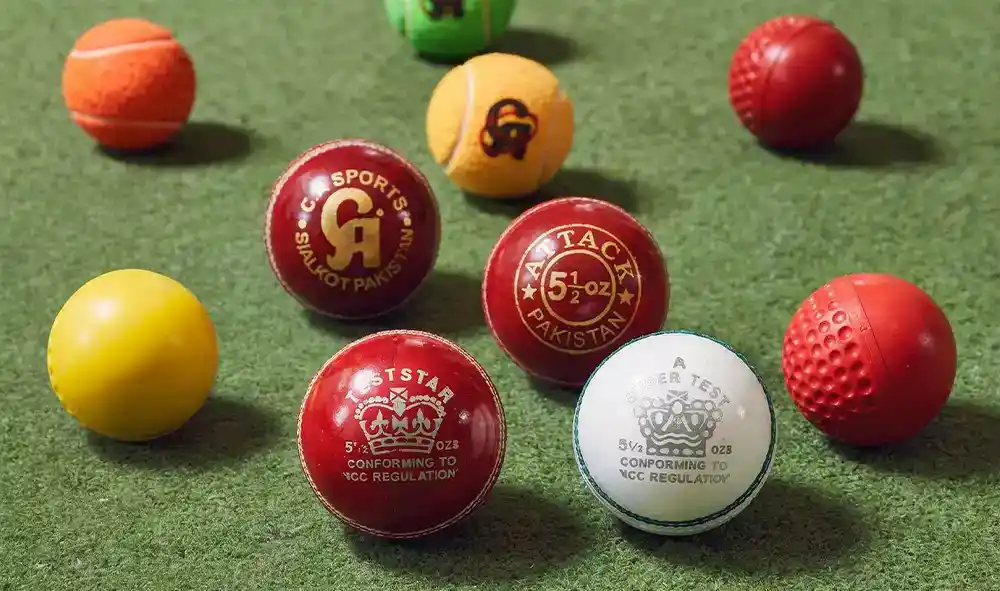
How to Choose the Right Cricket Ball for Practice and Match Play
The ball shapes everything in cricket. How it swings, how it bounces off the pitch, and how quickly a bowler develops real skill all depend on using the right ball in the right situation. Most players pick up whatever is available without thinking about format, surface, or level of play. This guide covers every main type of cricket ball, what each one is built for, and how to match your choice to whether you are heading to a net session, playing a league match, or setting up a game on a concrete pitch in your neighbourhood.
Quick Answer
For competitive matches, use a leather hardball. For net practice, a durable training ball such as the CA Attack or Super League works best. For street cricket on concrete, a tape ball is the right choice. For indoor cricket, use a soft ball. For juniors and beginners, start with a soft ball and move to a junior leather ball once basic skills are in place.
The Main Types of Cricket Balls
Understanding what separates one ball type from another is the first step. The construction, weight, seam height, and outer material of a ball all affect how it behaves off the pitch, how long it lasts, and what kind of cricket it suits.
Leather Cricket Balls (Hardballs)
Leather cricket balls are the standard for competitive cricket from school and club level to international Test matches. They are built around a cork and rubber core, tightly wound with string and covered with four quarters of leather stitched together to form the seam.
The seam is what makes the leather ball distinct. A well-maintained seam allows bowlers to generate swing, seam movement off the pitch, and reverse swing as the ball ages. These are skills that only develop through consistent practice with a genuine leather ball.
Leather balls come in three colours, each linked to a specific format.
- Red: Used in Test and first-class cricket. Swings in overcast conditions and develops reverse swing over time.
- White: Used in ODI and T20 cricket for visibility under floodlights. Deteriorates differently from a red ball.
- Pink: Used in day-night Test matches. Offers better visibility under artificial lighting while retaining the behaviour of a red ball.
Tape Balls
A tape ball is a tennis ball wrapped tightly in electrical tape. It is the most widely used ball for street cricket, rooftop cricket, and informal games across Pakistan and South Asia.
Tape balls swing considerably, sometimes more than a leather ball, because the tape creates an asymmetric surface that generates movement through the air. Players who grow up with tape ball cricket develop sharp instincts for swing and aggressive batting well before they face a leather ball in an organised match.
For street cricket on concrete or hard surfaces, a tape ball is the right tool. Using anything else changes the dynamics of the game entirely.
Soft Balls
Soft balls are used for beginner training, junior cricket, indoor play, and games where safety comes first. They reduce the fear of getting hit, which allows young players to develop better technique early. A batter who is not afraid of the ball learns faster than one who flinches on every delivery.
Official Cricket Ball Specifications (MCC Law 4)
For competitive cricket, the ball must meet the specifications set by MCC Law 4. Here are the official dimensions for each level.
Level | Weight | Circumference |
Men's cricket | 5.5 – 5.75 oz (155.9 – 163 g) | 8.81 – 9 in (22.4 – 22.9 cm) |
Women's cricket | 4.94 – 5.31 oz (140 – 151 g) | 8.25 – 8.88 in (21.0 – 22.5 cm) |
Junior cricket (Under-13) | 4.69 – 5.06 oz (133 – 144 g) | 8.06 – 8.69 in (20.5 – 22.0 cm) |
Any ball used in an organised match must fall within these ranges. Balls outside these specifications are not approved for official play, regardless of brand or quality.
Quick Recommendations by Situation
Situation | Recommended Ball | Why |
League or competitive match | CA Super Test or Test Star | Meets MCC spec, built for competitive performance |
School or club fixture | CA Test Star or League Special | Balance of performance and cost for regular fixtures |
Net practice (high volume) | CA Attack or Super League | Durable training ball, preserves match balls |
Street cricket (concrete) | Tape ball | Suited to hard surfaces, durable and safe |
Indoor cricket | Soft ball | Safe in enclosed spaces, consistent bounce |
Beginners and juniors | Softball, then junior leather | Builds confidence before transitioning to hardball |
Match Play vs Practice: Does the Ball Choice Matter?
Yes, and significantly. Using the wrong ball in the wrong context slows development and affects the quality of cricket.
For Competitive Matches
Any organised match with formal teams and umpires requires a leather hardball. Shot selection, footwork, seam reading, and bowling lines all behave differently with a leather ball compared to any alternative. Skills built in match conditions only develop correctly when the ball matches what is used in the actual game.
CA Sports produces three main series for match use. The Super Test series is CA's top-tier match ball, available in red, white, and pink, and is the right choice for competitive league and academy fixtures. The Test Star series is well-suited to regular club and school matches. The League Special series is designed for recreational leagues where volume of use and cost per ball are both considerations.
For Practice and Training
Training sessions require volume. Bowlers bowl many overs and batters face many deliveries, meaning the ball takes far more punishment than in a match. Using a top-tier match ball for every net session is unnecessary and expensive.
The CA Attack series is built specifically for net sessions, batting machine use, and fielding drills. It performs reliably in high-volume training without the cost of a premium match ball. The Super League series also suits practice environments well. Separating training balls from match balls keeps costs manageable over a long season.
Choosing a Ball Based on Playing Surface
Turf and Grass Pitches
Leather hardball cricket is made for turf. The surface provides consistent bounce, and the outfield allows the ball to travel as intended. If you play on a properly prepared grass or turf pitch, a leather match ball is the right choice.
Hard Concrete and Cement Surfaces
Concrete is the most common playing surface for street and neighbourhood cricket across Pakistan. On concrete, a leather ball wears quickly and can produce unpredictable, dangerous bounce. Tape balls are better suited to this environment. They grip hard surfaces reliably, produce consistent bounce, and last longer than leather on cement. Soft balls are appropriate for younger players on concrete, where safety is the priority.
Indoor Surfaces
Indoor cricket almost always requires a soft ball. The confined space, hard walls, and proximity of fielders make a leather ball unsuitable. Soft balls bounce predictably off indoor surfaces and remove the serious injury risk that comes with hardball play in an enclosed space.
Choosing by Player Level and Age
Young Players and Beginners
For players under 10 or those picking up cricket for the first time, start with a soft ball. The focus at this stage is on developing hand-eye coordination, basic stance, and catching confidence. Once those fundamentals are in place, moving to a junior leather ball introduces the seam and swing that prepare young players for organised cricket.
Club and School Players
This group benefits most from a clear separation between training and match balls. Using a Test Star or League Special for match day while using an Attack ball in nets keeps costs manageable across a season without compromising the quality of training or match play.
Serious and Competitive Players
Players training regularly for competitive cricket should use leather balls in practice as much as possible. Habits developed with a tape ball or soft ball do not transfer fully to leather ball conditions. Consistency between what you practise with and what you play with is important for performance.
CA Sports Cricket Ball Range
CA Sports has been manufacturing cricket equipment in Sialkot, Pakistan, since 1958, with a long-standing presence in cricket markets worldwide. The ball range covers every level from beginner to competitive match play.
Series | Colours | Best For |
Super Test | Red, White, Pink | Competitive and academy match play |
Test Star | Red, White, Pink | Club and school fixtures |
League Special | Red, White, Pink | Recreational leagues and regular competitive play |
Super League | Red, White, Pink | Training and recreational use |
Attack | Red, White, Pink | Net sessions and batting machine training |
Soft Balls | Multiple | Junior cricket, beginners, and indoor play |
Frequently Asked Questions
What type of cricket ball should a beginner use?
Beginners should start with a soft ball. It removes the fear of injury and allows new players to build basic technique and catching confidence early. Once those skills are established, moving to a junior leather ball is the natural next step.
What is the official weight of a men's cricket ball?
Under MCC Law 4, a men's cricket ball must weigh between 5.5 and 5.75 ounces (155.9 to 163 grams) and have a circumference of 8.81 to 9 inches (22.4 to 22.9 cm). Balls outside these specifications are not approved for official match play.
What is the difference between a red ball and a white ball?
Red balls are used in Test and first-class cricket. They swing in overcast conditions and develop reverse swing as they age. White balls are used in ODI and T20 cricket for visibility under floodlights and can behave differently in terms of swing and deterioration.
Which colour cricket ball should I choose?
Use a red ball for traditional longer-format cricket, such as Test matches and multi-day club games. Use a white ball for limited-overs cricket, including T20 and ODIs. Use a pink ball for day-night match conditions where visibility under changing light is important.
What is a tape ball and when should I use it?
A tape ball is a tennis ball wrapped in electrical tape. It is designed for street cricket and informal games on hard surfaces such as concrete, which are common across Pakistan. Tape balls swing significantly and suit fast, aggressive play in casual settings.
Which cricket ball is best for concrete pitches?
Tape balls and soft cricket balls are better suited to concrete. Leather balls wear down quickly on hard surfaces and can produce unpredictable bounce that increases injury risk. For street or courtyard cricket on concrete, a tape ball is the standard choice.
Which CA Sports ball is best for net practice?
The CA Attack series is built for training and net use. It handles high-volume practice reliably without the cost of a premium match ball. The Super League series is also a good option for practice sessions.
Do beginners need a leather cricket ball?
Not immediately. Beginners should start with a soft ball to build confidence and basic technique. Once they are comfortable and ready for organised cricket, transitioning to a junior leather ball is the appropriate next step.
Can I use a leather ball on a concrete surface?
It is not recommended. Leather balls deteriorate quickly on concrete and can produce dangerously unpredictable bounce. Tape balls are the right choice for concrete cricket, and soft balls are appropriate for younger players on hard surfaces.
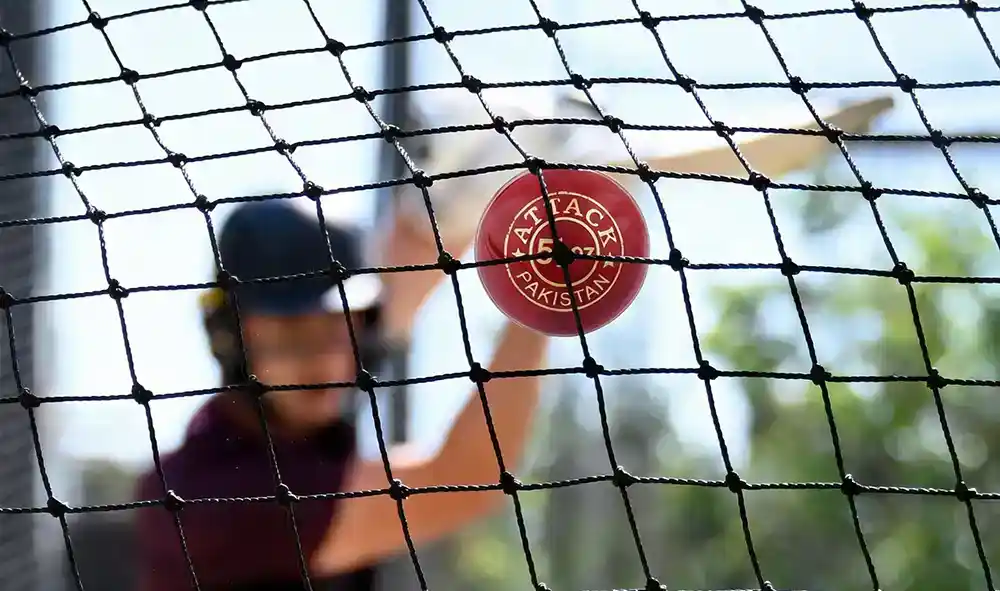
CA Sports cricket balls are available across the full range, from training balls to match-grade hard balls in red, white, and pink. Shop the complete collection at thecasports.com with delivery across Pakistan and worldwide.

Recent Blog
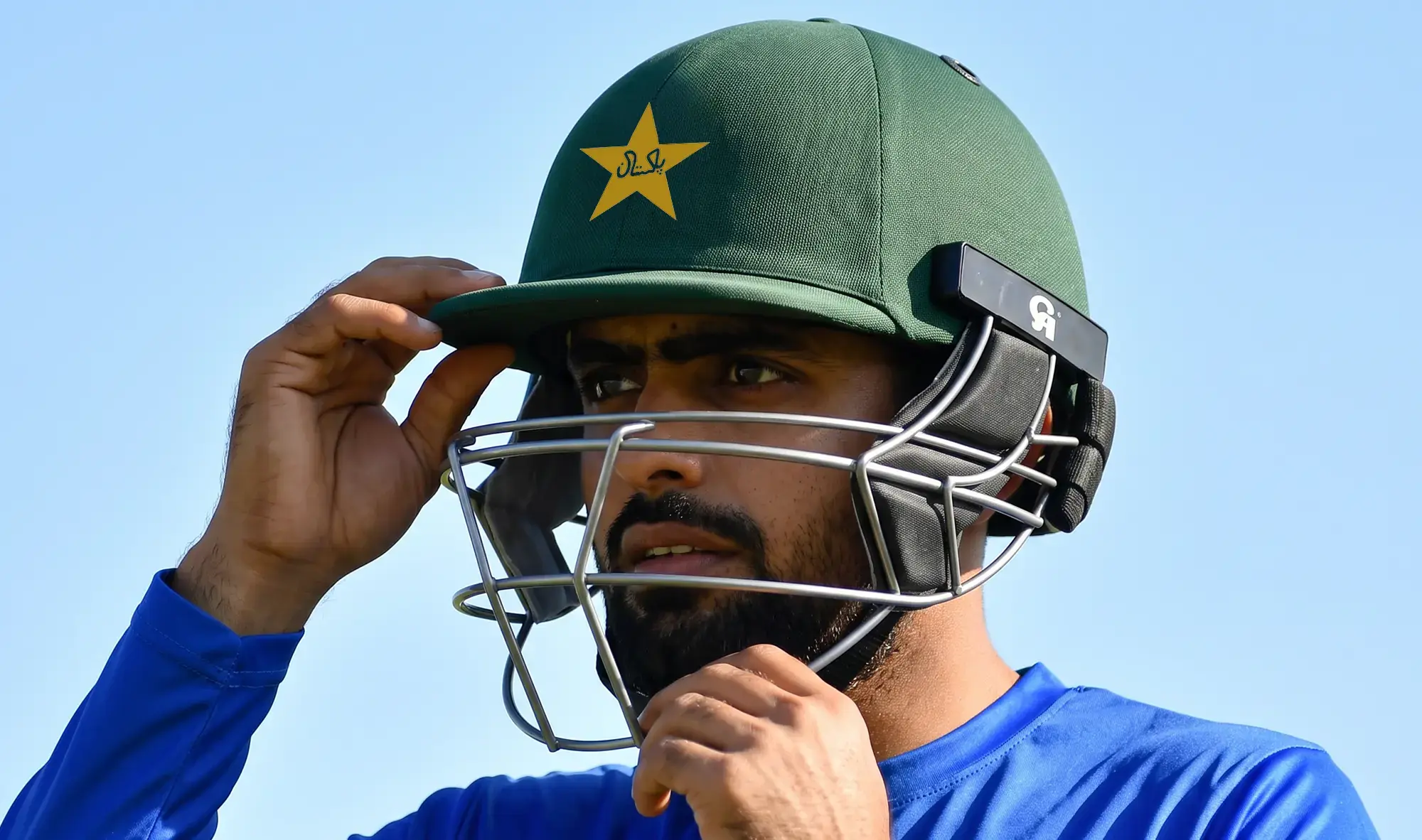
05 Sep 2026
How to Choose the Best Cricket Helmets with Advanced Face Guard Technology

31 Aug 2026
What Protection Does a Fast Bowler Actually Need?
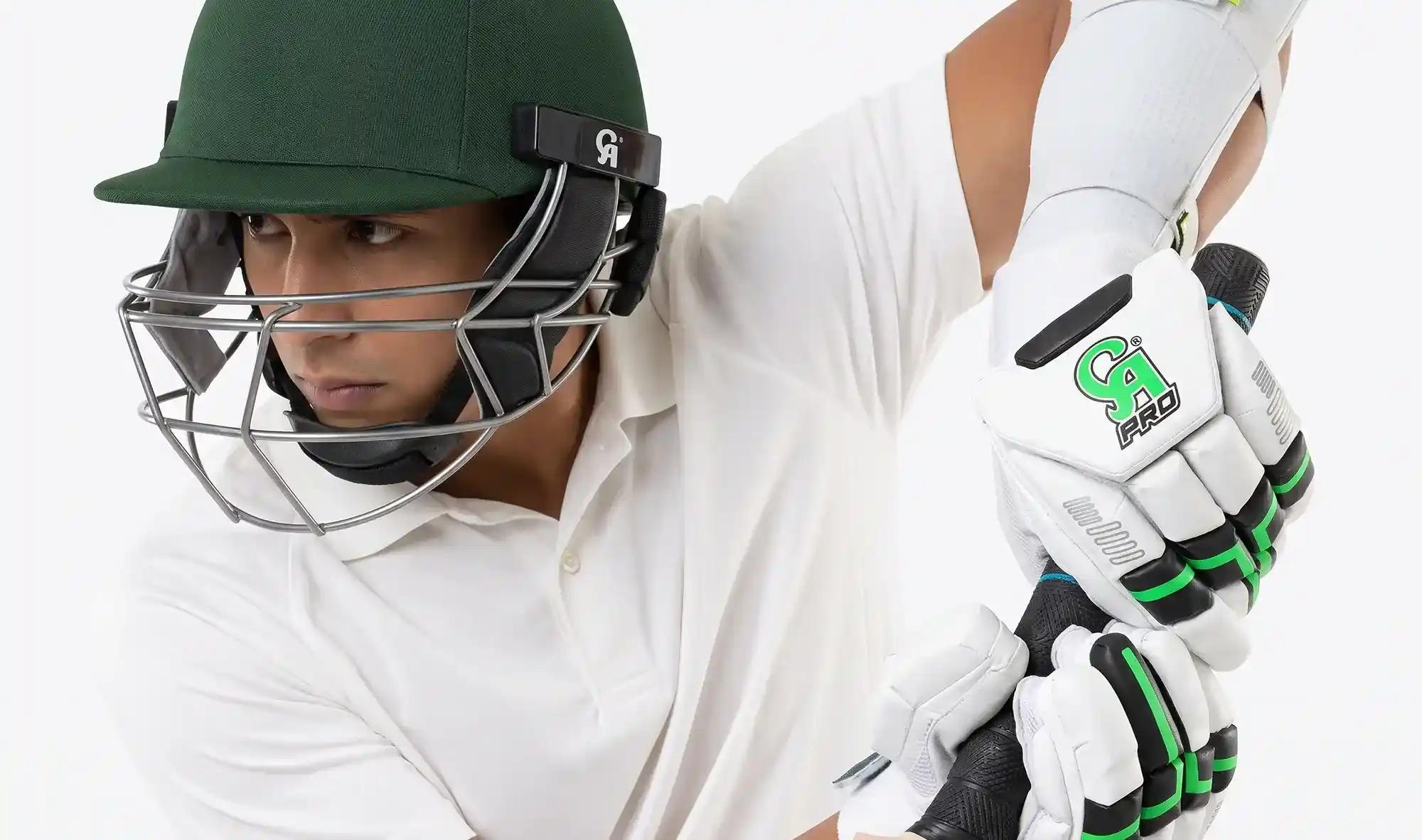
28 Aug 2026
Do You Actually Need a Cricket Arm Guard?
28 Aug 2026
Why Your Helmet and Neck Guard Are Crucial
22 Aug 2026
How to Replace a Cricket Bat Grip?
12 Aug 2026
The Role of Carbon Fiber in Modern Cricket Bat Handles
30 Jul 2026
How to Knock In a Cricket Bat Properly: A Step-by-Step Guide
23 Jul 2026
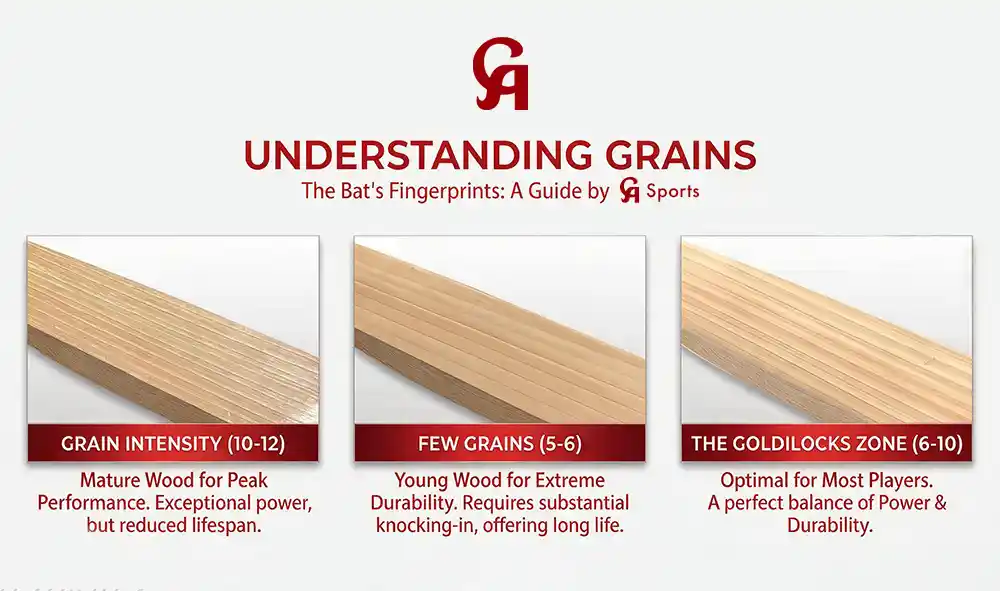
Cricket Bat Grains Explained: What 5, 7, and 10 Grains Really Mean